ServicesCommercial Roofing
Commercial Roofing in Raleigh
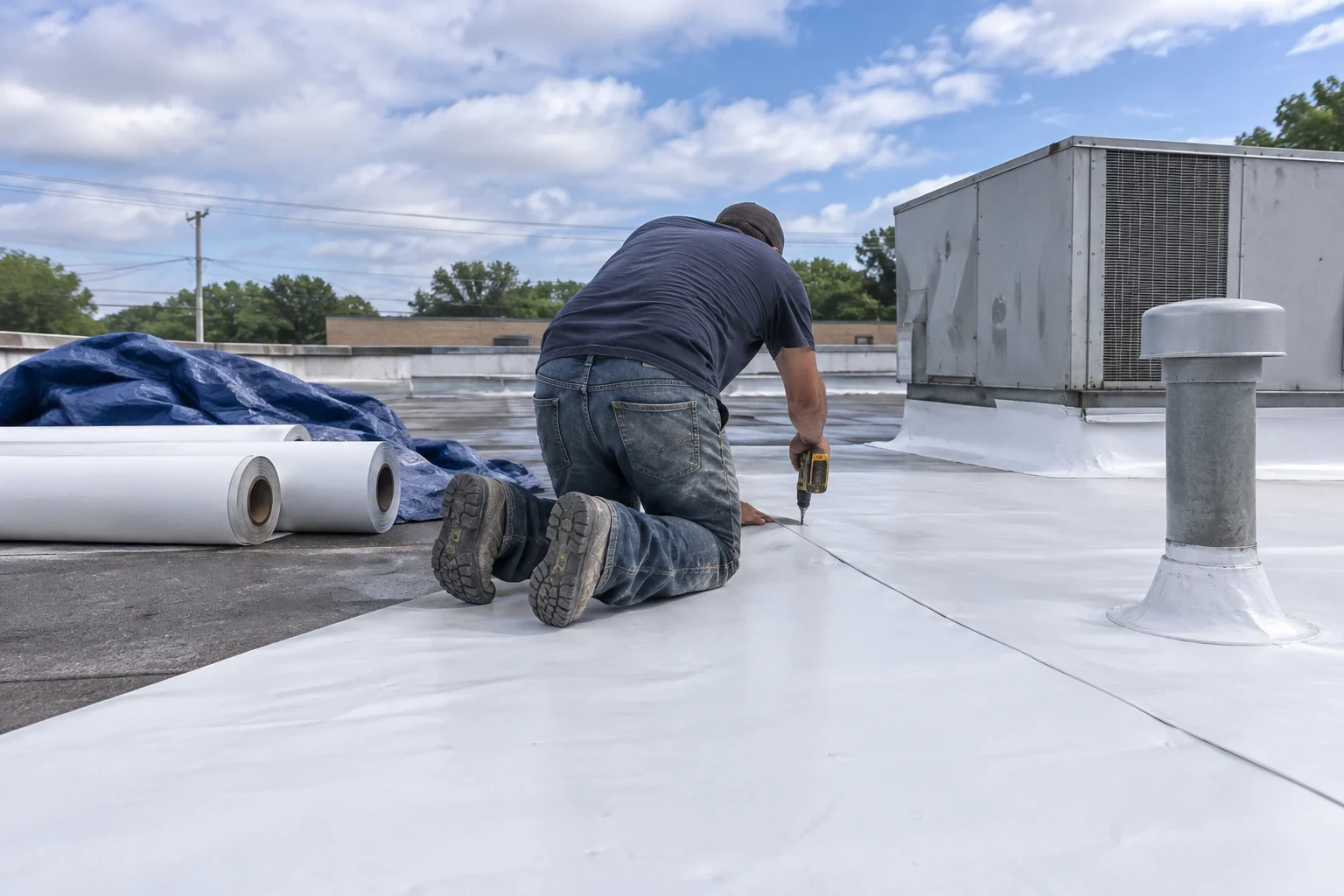
We repair, recover and replace roofs on existing commercial buildings, from low-slope TPO and EPDM to metal and modified bitumen. Every job starts with a free roof inspection, and when the work needs a permit, we pull it and walk the inspector through it.
Roof work for the building you already run
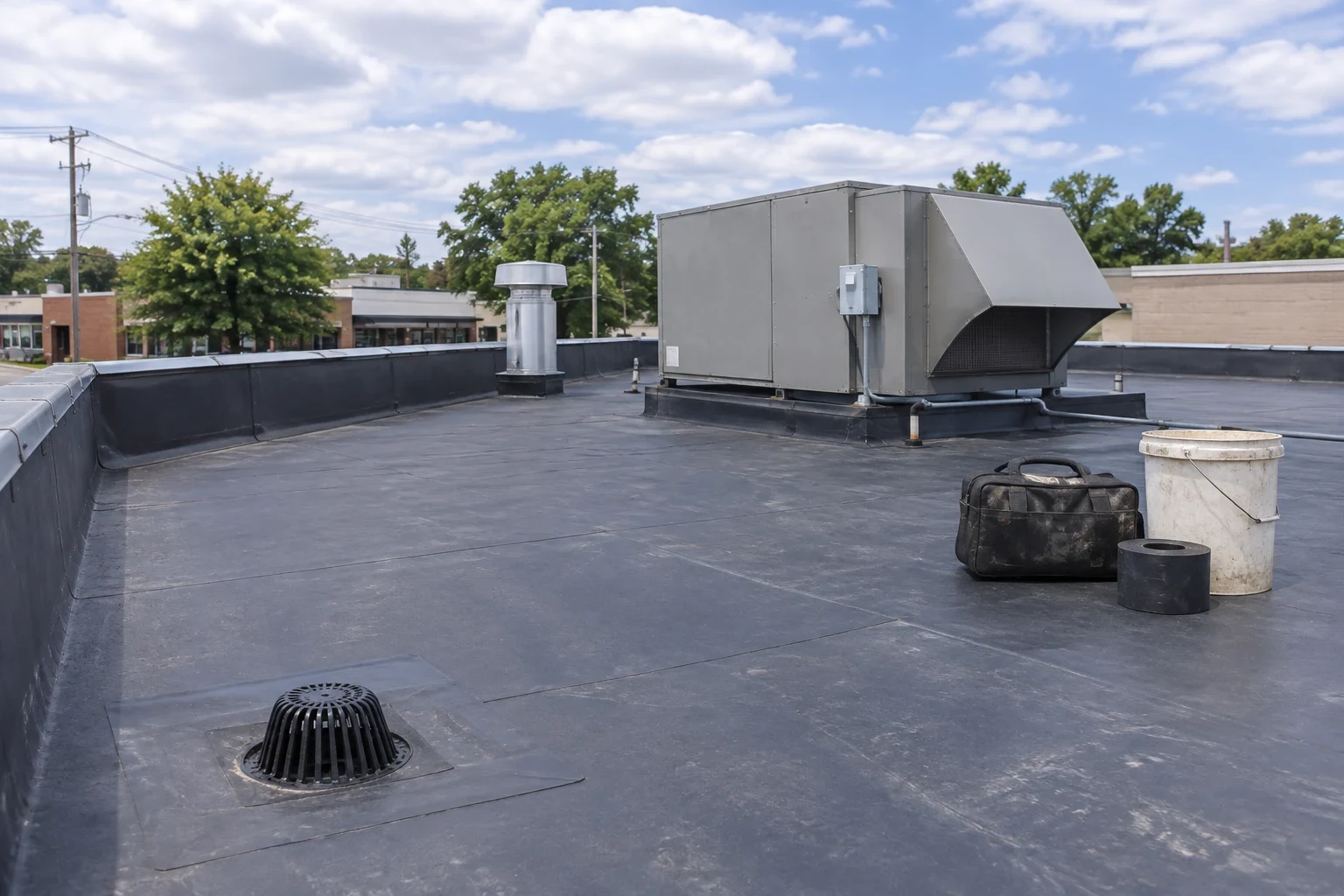
Nearly every commercial roof around Raleigh is low-slope, and a flat roof wears out in its own way. Rain lingers on the surface instead of running straight off, so the seams and flashings carry most of the load. A small tear beside a drain can quietly wet the insulation over a large area long before anyone sees a stain on a ceiling tile.
We work on existing offices, retail spaces, churches, small warehouses and multi-tenant buildings. Our job is to find out what the roof actually needs, tell you plainly whether that is a repair, a recover or a full tear-off, and do the work so it passes inspection the first time.
Reroofing a commercial building usually means a permit and a final inspection. We handle that paperwork and explain what the code asks for, like insulation levels and how many roof layers are allowed, so nothing surprises you once the crew is on the roof.
What our commercial roofing work covers
- Leak tracing and repairs
- We find where water is getting in, which is often not where it shows up inside. Repairs include welding open seams, patching membranes, resealing penetrations and replacing damaged flashing.
- Flashing, parapets and penetrations
- Most low-slope leaks start at edges and openings. We rebuild flashing at parapet walls, curbs for rooftop units, pipe boots and pitch pans.
- Drains, scuppers and gutters
- Ponding water shortens a membrane's life. We clear and repair drains and scuppers, and our gutters work covers buildings that shed water off the edge.
- Roof recovers
- When the existing roof is dry and sound, a new membrane can sometimes go right over it. We confirm with core samples first, because code does not allow covering wet insulation or stacking layers past the limit.
- Full tear-off and replacement
- We strip down to the deck, repair any damaged decking, install insulation that meets current energy code and finish with a new membrane or metal system.
- Photo reports for owners and managers
- After every inspection you get photos of what we found. They help with budgeting, tenant questions and insurance claims.
Signs your commercial roof needs attention
Water still standing days after rain
Ponding that lingers points to a sagging deck, blocked drains or crushed insulation. It speeds up membrane wear and adds weight the structure was not meant to carry.
Stained ceiling tiles
By the time tiles stain, water has usually traveled. The real source may be several feet away along the deck.
Lifting seams or blisters
Open seams on TPO or EPDM and blisters on modified bitumen let water slip under the membrane.
Soft spots underfoot
A roof that feels spongy often has wet insulation, which loses its value and can rot the deck below.
Cooling bills creeping up
Wet or thin insulation makes rooftop units work harder through a Raleigh summer.
Damage after a storm
Wind peels back edges and hail bruises membranes. We document storm damage for your insurer and can meet the adjuster on the roof.
How a commercial roofing job runs
- 1
Free roof inspection
We walk the roof, check drains, seams and flashing, and take core samples where we suspect moisture. You get a photo report of what we found.
- 2
A plain recommendation in writing
We explain whether the roof needs a repair, a recover or a replacement, and why. The estimate is line by line. If one section is failing and the rest is sound, we tell you that.
- 3
Paperwork and a schedule that fits your business
We pull the permit when the job requires one. Then we plan work hours, entrances and parking with you so customers and tenants can still get in.
- 4
The work and the final inspection
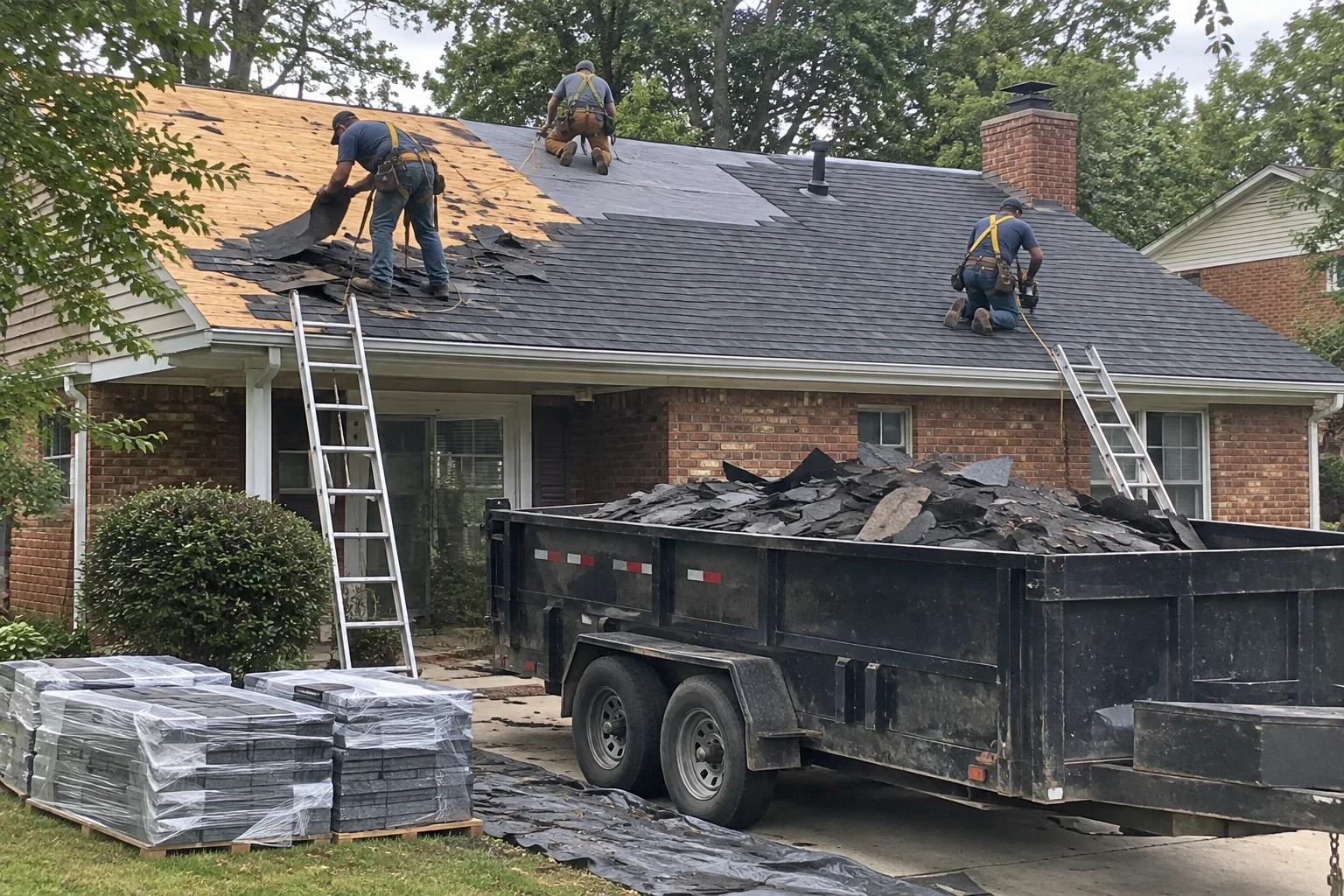
Our crew keeps debris contained and protects walkways below. We meet the inspector for the final and correct anything flagged.
- 5
Cleanup and closeout
We sweep the site for fasteners, haul away old material and give you photos and inspection records for your files.
What moves the cost of a commercial roof
Two buildings with the same footprint can have very different roofs underneath, so commercial prices vary widely. We price from what we find on your roof, in writing, and walk you through each line. Financing is available through Acorn Finance if it helps spread out a larger project.
- Size and roof layout
- Square footage matters, but so do the number of drains, parapet walls and changes in roof level. More edges and corners mean more flashing work.
- Repair, recover or tear-off
- A targeted repair costs far less than a recover, and a recover usually costs less than a full tear-off. Which one fits depends on what the core samples show.
- Insulation and deck condition
- Wet insulation has to come out, and soft decking has to be replaced. Neither is visible until we open the roof, which is why we check before we quote.
- Membrane or metal choice
- TPO, EPDM, modified bitumen and metal differ in material cost, labor and expected life. We explain the tradeoffs for your building.
- Rooftop equipment, access and code
- Units that need curbs rebuilt, tight access or a crane add time. Current energy code may also require more insulation than the old roof had.
Commercial roofing questions
Something not covered here? (919) 820-8641
Do I need a permit to reroof a commercial building in Raleigh?
Most of the time, yes. A full replacement or a recover usually calls for a permit and a final inspection, while a small repair often does not. We confirm what your job requires, file the paperwork when it is needed and are on the roof when the inspector arrives.
Is a recover over the existing roof an option?
Sometimes, if the current roof checks out. The old system has to be dry and solid, and it cannot already be at the layer limit the code sets. Core samples settle the question. Any wet insulation we find comes out before new material goes down.
Will roof work shut down my business?
Usually not. Most repairs and recovers happen up on the roof while your doors stay open. Before we start, we sit down with you to plan entrances, parking and when the louder work happens.
Which roof systems can you handle on a commercial building?
We work on existing buildings with single-ply membranes such as TPO and EPDM, as well as modified bitumen, older tar-and-gravel built-up roofs and metal. Some buildings also have pitched sections covered in shingles, and our roof repair and roof replacement crews take care of those.
Do you work on buildings outside Raleigh?
Yes. We look after commercial properties around the area, including Cary, Garner, Durham and Wake Forest. You will find the full list on our Service Areas page.
Can you help with an insurance claim after storm damage?
Yes. We offer adjuster meetings and help through the insurance claim process, backed by photos and measurements of the damage. Coverage is the adjuster's call. Our part is showing them clearly what we found on your roof.
Find out what your roof really needs
One call gets you a free roof inspection and a photo report you can share with owners, tenants or your insurer. If the job needs city sign-off, we take care of it.