ServicesRoof Inspections
Roof Inspections in Raleigh
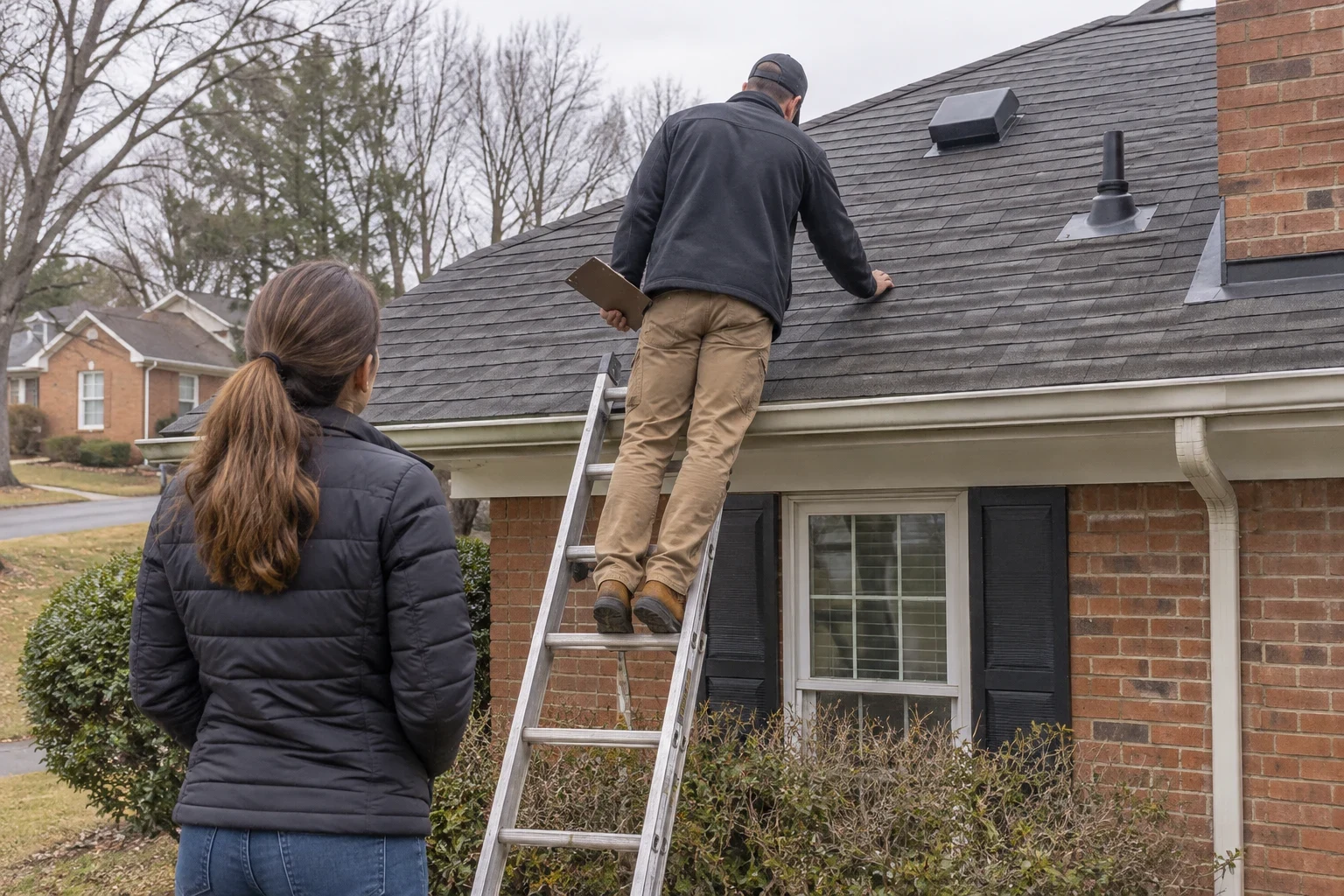
We climb up, look closely and show you what we saw. Your free roof inspection ends with a photo report, a plain explanation of what is fine and what is not, and an honest answer on whether anything needs fixing now, later or not at all.
What a roof inspection tells you
Leaks rarely announce themselves early. They usually begin with something minor that is hard to spot from the ground, like a shingle tab that has worked loose, a rubber vent boot gone brittle or a nail creeping up through the surface. An inspection catches those trouble spots while they are still cheap to fix, long before a stain shows up indoors. We walk each slope, head into the attic if there is a hatch we can get through, and take pictures of anything you should see for yourself.
We also look at the roof the way a building inspector would. We check for drip edge at the eaves, whether the attic is moving enough air, and how many layers of shingles are already on the house. Those answers matter if you ever replace the roof, file a claim or sell your home, and we explain them in everyday words.
You get the facts and the photos. What you do with them is your call, and we never pressure you either way.
What we check on every inspection
Shingles and surface wear
We look for missing, creased or curling shingles, bare spots where the granules have washed off, and dark streaks from algae. Granule loss is often the first sign a roof is nearing the end of its life.
Flashing and roof penetrations
Chimneys, skylights, walls and vent pipes are where most leaks begin. We check the metal flashing, the sealant and the rubber pipe boots, which tend to crack after years of summer sun.
Attic, decking and ventilation
From the attic we look for water stains, damp or soft decking, and signs of poor airflow like heavy heat buildup or frost marks in winter. Weak ventilation shortens shingle life and is a common code issue.
Code items from past work
We note whether earlier roofing work has drip edge, proper underlayment and an acceptable number of layers. If something would need correcting during a future replacement, you hear about it now, not halfway through the job.
Gutters and drainage
Clogged or pulling gutters push water back under the roof edge. We check how water leaves your roof and point out anything our gutters crew should look at.
Signs it is time for a roof inspection
A water stain on the ceiling
Even a dry, faded stain means water got in at some point. We trace it back to the source so the right spot gets fixed.
After a hard storm
Strong summer thunderstorms and the remnants of tropical storms can lift shingles or drop limbs without leaving damage you can see from the yard. A look up close tells you whether you have a repair or an insurance claim.
Shingle grit in the gutters
Piles of granules at the downspouts mean the shingles are wearing thin. It is worth knowing how much life is left.
Buying or selling a home
A roof inspection gives you a clear picture before closing, so a surprise does not derail the sale or land on you after move-in.
It has simply been a while
If your roof is past 15 years old and nobody has been up there lately, an inspection is a sensible, low-stakes check.
How your inspection goes
- 1
You call and we set a time
We ask a few questions about the roof's age and any problems you have noticed, then settle on a day and hour that suit your schedule. Being home is optional for the outside part, though we enjoy meeting you in person when you are around.
- 2
We inspect the roof and attic
We walk the roof if it is safe to do so and check the attic if there is access. Most homes take about an hour. We step carefully and leave everything as we found it.
- 3
We walk you through the photos
You see each problem we found with a short note on why it matters. Then we group the findings by urgency: items to handle soon, items worth keeping an eye on, and items that are in good shape.
- 4
You decide what happens next
If work makes sense, we explain your options, whether that is roof repair, a full roof replacement, or nothing at all for now. Any estimate comes with a clear note on whether the job needs a permit.
What it costs and what moves the price after
The inspection itself is free, and so is the photo report. If we find something that needs work, the price of that work depends on what is going on and how much of the roof it touches. Financing is available through Acorn Finance for larger jobs.
- Condition of the decking
- The plywood under your shingles stays hidden until the old roof is torn off, and rot or soft spots can turn up then. Before any work starts, we explain how replacing damaged decking would be handled and priced, so you know the plan in advance.
- Size and steepness of the roof
- Steeper roofs need more safety gear and take longer to work on, which adds labor.
- Bringing older work up to code
- Missing drip edge, too many layers or weak venting may need correcting as part of the job. We point these out during the inspection so they are already in the plan.
- Whether insurance is involved
- When an insurer approves a storm claim, the share you pay yourself may come down to your deductible. We offer adjuster meetings and help through the insurance claim process.
Roof inspection questions
Something not covered here? (919) 820-8641
Is the inspection really free?
Yes. The inspection and the photo report cost nothing, and you are under no obligation to hire us for anything afterward. We would rather you trust what we tell you than feel pushed.
Are you going to try to sell me a whole new roof?
That is not how we work. A lot of the roofs we look at need a modest fix, and some are in good shape and need nothing. The photos let you see the same things we saw and make up your own mind.
Can an inspection help with an insurance claim?
It often does. Dated photos of storm damage give your adjuster something concrete to review. If you decide to file, we can meet the adjuster on the roof and help you through the claim, though the coverage decision is always the insurance company's.
How regularly should someone look at my roof?
For most roofs, a visit every year or two is plenty, with an extra look after any severe storm. Older roofs and homes shaded by big trees deserve a closer eye, since debris and moisture wear shingles faster.
Do you inspect homes outside Raleigh?
We do. We regularly inspect roofs in Cary, Garner, Wake Forest, Apex and other towns around the area. Ask when you call and we will let you know.
Find out where your roof stands
One visit, a set of clear photos and an honest read on what your roof needs. It costs nothing to know.