ServicesSiding
Raleigh Siding Repair and Replacement
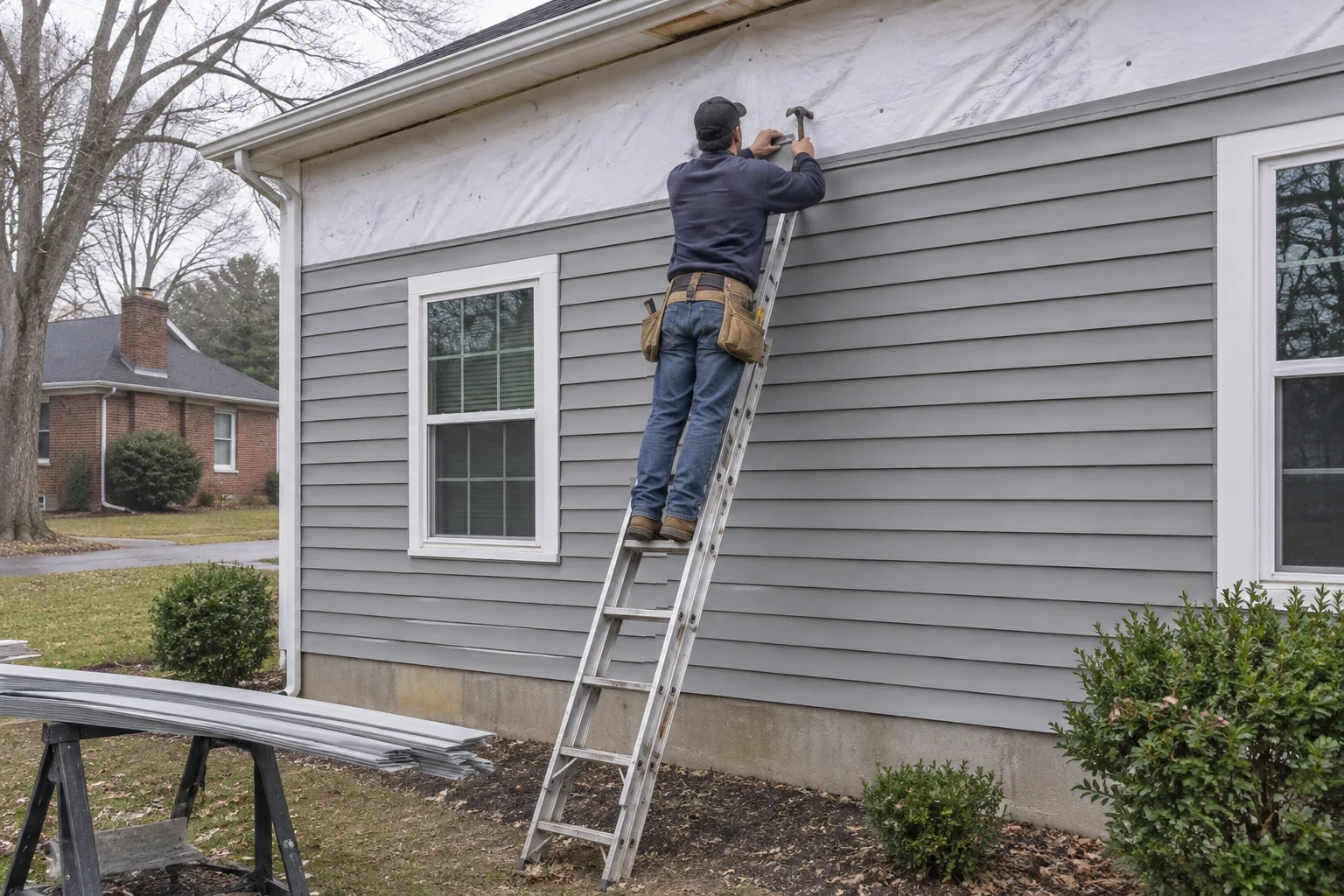
New panels only help if the layers behind them work. We fix or replace vinyl and fiber cement siding on your home and give the same care to the house wrap, flashing and trim that keep rain out of your walls. You see photos of our findings first.
Siding is a water barrier first
Most people judge siding by how it looks from the street. We judge it by what it does. Siding sheds the bulk of the rain, and a weather-resistive barrier behind it catches what slips past. When either one fails, water reaches the sheathing and framing, often for months before anyone notices.
Sometimes a few damaged panels can be swapped out and the wall is fine. Other times the panels are hiding soft sheathing, missing flashing or a barrier that was never installed. We open up a section, take photos and tell you plainly which situation you are in. We also confirm up front whether your project needs a permit and handle it when it does, so the work is on record and inspected.
What our siding work includes
Vinyl and fiber cement
We repair and install both. Vinyl is light and forgiving, while fiber cement holds up to impact and heat but needs careful cutting, fastening and clearances.
House wrap and sheathing check
With old siding off, we inspect the sheathing for rot or soft spots and replace damaged boards. Then we install a continuous weather-resistive barrier, lapped so water runs down and out.
Flashing at every opening
We flash around existing windows and doors, at band boards and wherever the wall meets a deck or porch. These are the spots where most wall leaks start.
Kick-out flashing at the roofline
Where a roof edge dies into a sidewall, a small kick-out flashing steers water into the gutter instead of down the wall. It is one of the most commonly missed details we see, and as roofers we know exactly where it belongs.
Proper clearances
We keep siding the right distance off the ground and off roof surfaces, following the manufacturer's instructions. That gap stops the bottom edge from wicking water.
Daily cleanup
Torn-off panels, fasteners and scraps get hauled away at the end of each work day. Before the crew heads out, we sweep the lawn and drive with a magnetic roller to catch stray nails.
Signs your siding needs attention
- Cracked, warped or loose panels
- Heat can warp vinyl, and wind can unlock panels. Any gap is a path for rain.
- Soft spots or swelling
- Push gently on the siding just below a windowsill or near the base of the wall. Give or sponginess there can mean the boards underneath have been soaking up water.
- Stains below rooflines
- Dark streaks running down a wall where a roof meets it often mean missing kick-out flashing.
- Peeling or bubbling indoors
- Water stains or blistering paint on the inside of an exterior wall can trace back to failed siding or flashing.
- Mildew that keeps coming back
- In our humid summers, some mildew is normal. Growth that returns quickly in the same spot usually points to trapped moisture.
How a siding job runs
- 1
Free inspection with photos
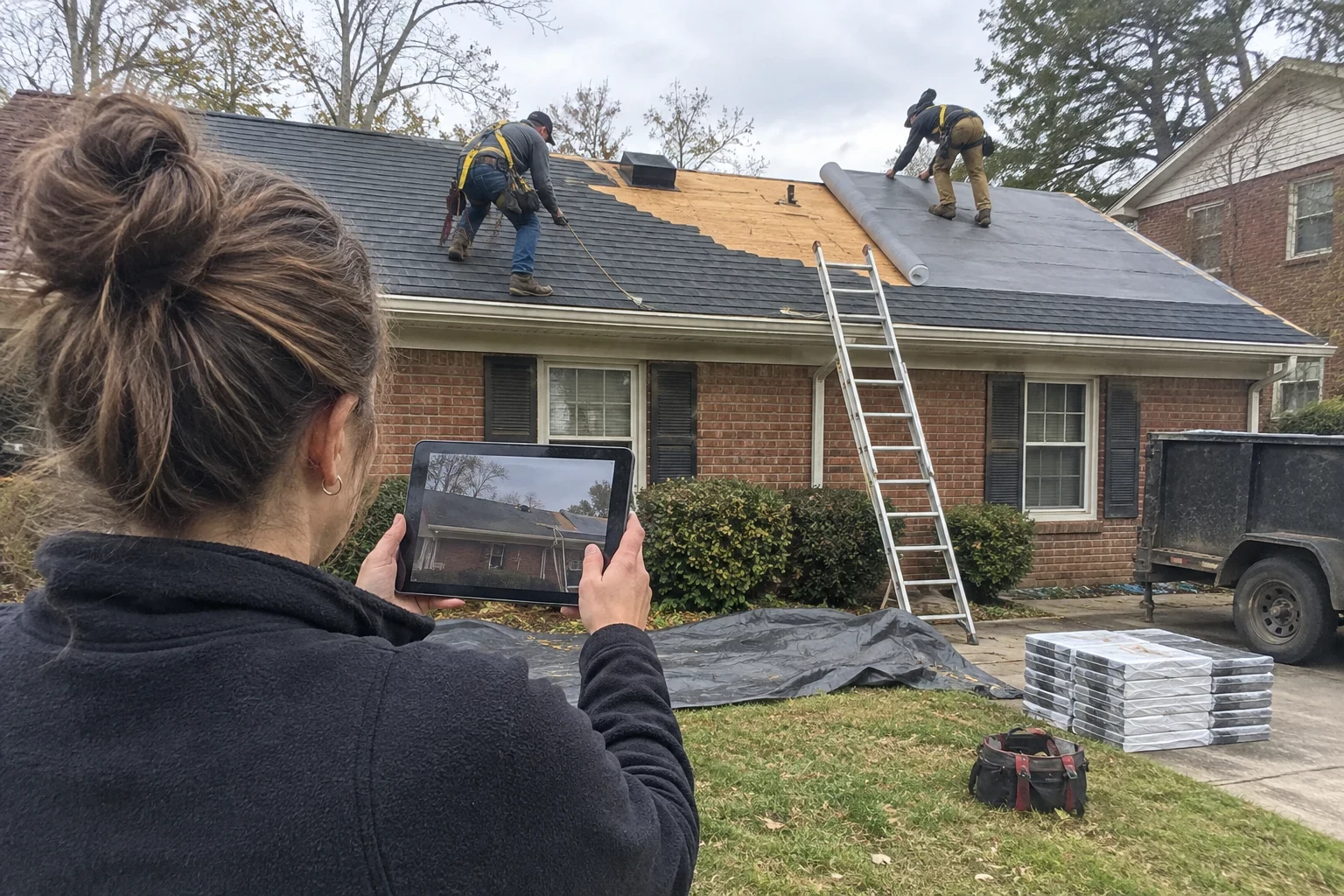
We walk every wall, check suspect areas closely and send you a photo report of what we found. We also look up at the roof edges, since many wall leaks start there.
- 2
A clear written estimate
You get a line-item estimate that separates siding, barrier, flashing and any sheathing repair. Any required fees are listed too, so nothing surprises you later.
- 3
Work day
We protect landscaping and set up near the walls we are working on. Old siding comes off one section at a time, so your home is never left open to weather overnight.
- 4
Inspection and walkthrough
When the city or town needs to sign off, we schedule that inspection and are there for it. Then we walk the house with you and point out the flashing and trim details we installed.
What affects the cost of siding
Siding prices vary more than people expect, mostly because of what we find once old panels come off. We price from a real look at your walls, and your written estimate shows each part separately. Financing is available through Acorn Finance if you would like to spread out the cost.
- How big and how tall
- A larger wall surface takes more panels and more hours to hang. Upper-floor walls also call for ladders or staging, which slows the pace.
- Material choice
- Fiber cement costs more than vinyl to buy and to install. It is heavier and needs special cutting and fastening.
- Sheathing condition
- Rotted or soft sheathing has to be replaced before new siding goes on. We photograph any damage and show you before adding it.
- Trim and openings
- Homes with many windows, doors, corners and gables need more flashing and trim work than a plain rectangle.
- Code review and sign-off
- When your project requires a permit, its fee and the inspection visit become part of the job.
Siding questions we hear
- Can you fix only the damaged pieces?
- In many cases we can. Vinyl locks together in courses, so we can usually release one piece and slide a new one in without disturbing the rest. Matching sun-faded color is the tricky part, and we will show you how close we can get before you commit.
- Do I need a permit to replace siding?
- It depends on the scope of the work and where you live, since Raleigh and nearby towns like Cary and Garner handle it differently. We check the requirements for your address before work starts and take care of the paperwork when one applies.
- Will insurance cover storm-damaged siding?
- If wind or hail damaged it, it may be covered under your policy. We document the damage with photos, meet with your adjuster and help you through the claim. Your insurer makes the final call on coverage. Our storm damage repair page covers this in more detail.
- Should I do siding and my roof at the same time?
- It can make sense, especially where roof and wall meet. Doing both lets us tie the step flashing, kick-out flashing and siding together properly. We can look at both during the same inspection.
- Vinyl or fiber cement?
- Vinyl costs less and is easy to repair. Fiber cement resists dents and holds its shape in summer heat. We walk you through both and let you choose.
Find out what is behind your siding
We will inspect your walls and roof edges, photograph what we find and explain your options in plain terms.